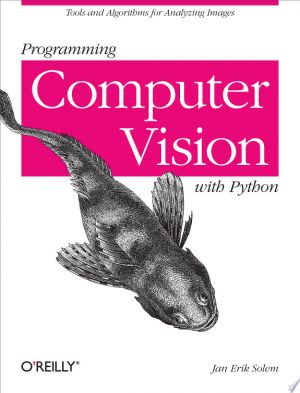
Programming Computer Vision with Python
by Jan Erik Solem · Programming
About this book
If you want a basic understanding of computer vision's underlying theory and algorithms, this hands-on introduction is the ideal place to start. You'll learn techniques for object recognition, 3D reconstruction, stereo imaging, augmented reality, and other computer vision applications as you follow clear examples written in Python.Programming Computer Vision with Python explains computer vision in broad terms that won't bog you down in theory. You get complete code samples with explanations on how to reproduce and build upon each example, along with exercises to help you apply what you've learned. This book is ideal for students, researchers, and enthusiasts with basic programming and standard mathematical skills.- Learn techniques used in robot navigation, medical image analysis, and other computer vision applications- Work with image mappings and transforms, such as texture warping and panorama creation- Compute 3D reconstructions from several images of the same scene- Organize images based on similarity or content, using clustering methods- Build efficient image retrieval techniques to search for images based on visual content- Use algorithms to classify image content and recognize objects- Access the popular OpenCV library through a Python interface This book is available under a Creative Commons Attribution-NonCommercial-NoDerivatives license (CC BY-NC-ND), which means that you are free to copy and distribute it, as long as you attribute the source, don't use it commercially, and don't create modified versions. If you enjoyed the book and would like to support the author, you can purchase a printed copy (hardcover or paperback) from official retailers.
Key Insights
- Master the bridge between raw mathematical theory and practical implementation through Python-driven workflows for 3D reconstruction and stereo imaging.
- Leverage advanced clustering and classification algorithms to transform unstructured image data into organized, searchable visual databases.
- Build sophisticated computer vision pipelines including texture warping, augmented reality overlays, and autonomous robot navigation techniques.
Related Books

Sign in to leave a review and earn XP
Create AccountCommunity Reviews
No reviews yet. Be the first to review this book!